Table of Contents
- What Is a Free-Sprung Movement?
- Difference Between Free-Sprung and Regulated Movements
- Types of Free-Sprung Systems
-
Which Replica Watches Use Free-Sprung Movements?
-
The Movements with Fake Free-Sprung Balance System
-
Are Free-Sprung Movements Really Better?
The replica watch market has changed dramatically.
One or two years ago, people mainly paid attention to the major factories, such as VS, Clean, and others, watching to see whether they would release new models or make major improvements to existing ones.
A year ago, Clean Factory was forced to shut down. After that, many new names appeared in the market. Competition among these factories has created a level of prosperity that the replica watch market had not seen for many years.
The second major change is the rise of free-sprung movements. This has become a clear trend. In the past, only a few relatively unknown small factories offered replica watches with free-sprung movements. Now, many traditional major factories have joined in, including VS, QF, ZF, and others.
Today, I will give a comprehensive analysis of this free-sprung movement trend, including what a free-sprung movement is and which mainstream free-sprung movements are currently available on the market. I hope this article will be helpful to people who are interested in buying replica watches with free-sprung movements.
What Is a Free-Sprung Movement?
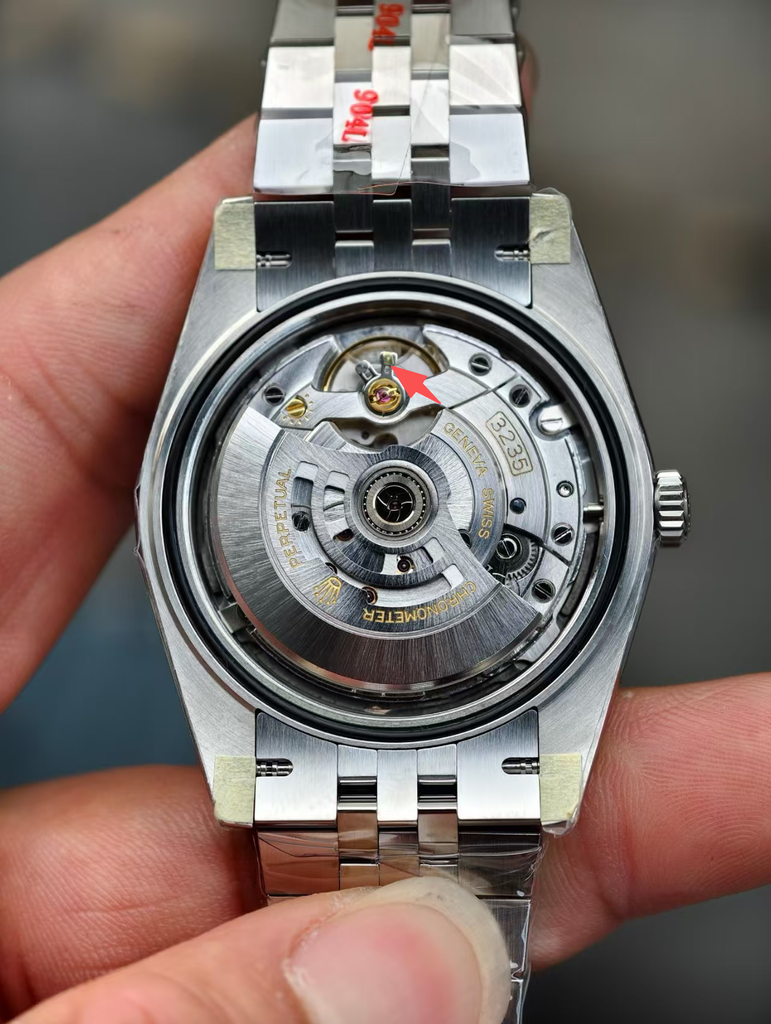
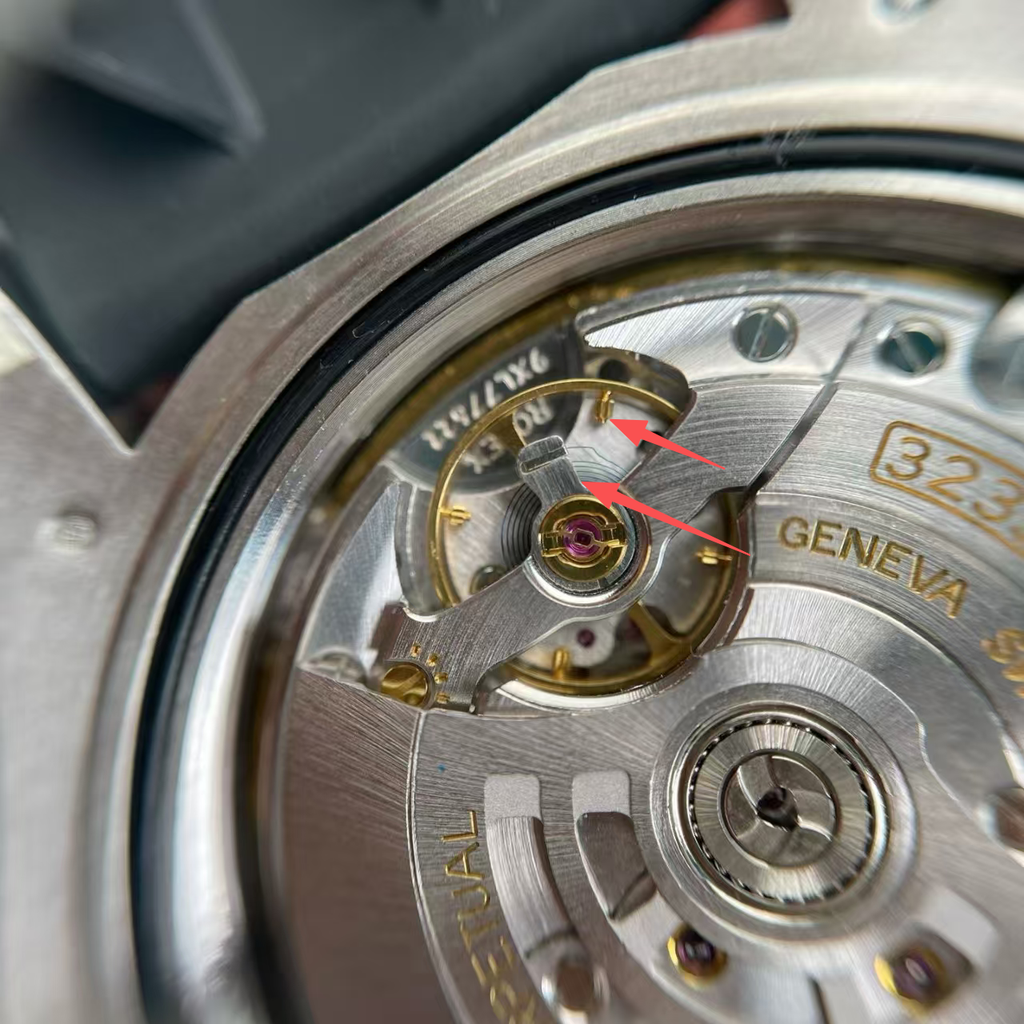
The balance wheel and hairspring system is one of the most important structures in a mechanical watch movement. In general, there are two types: regulated balance system and free-sprung balance system.
A free-sprung movement does not use a traditional regulator index to adjust the rate. Instead, the timing error is adjusted through regulating weights positioned on the balance wheel.
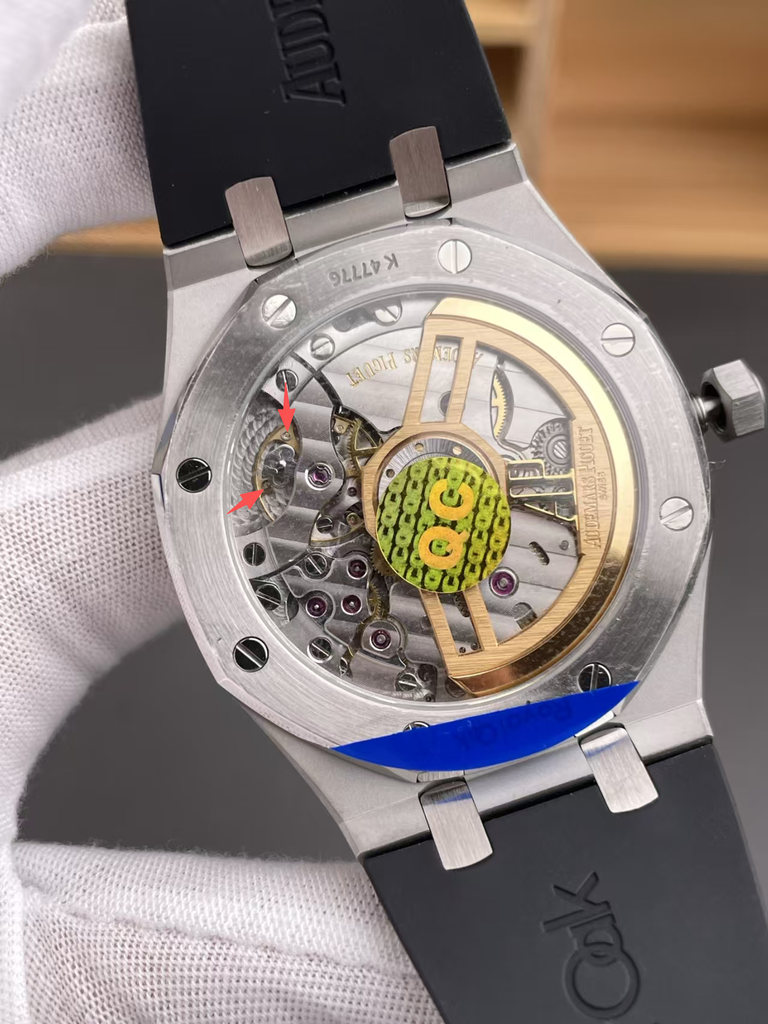
Many high-end Swiss watch movements use this structure, including the Rolex 3235, Patek Philippe 324, Audemars Piguet 4302, and others. Their balance wheel and hairspring systems all use a free-sprung design.
Difference Between Free-Sprung and Regulated Movements
The main difference is the way the movement’s timing rate is adjusted.
With a regulated movement, the rate is adjusted by changing the position of the regulator, which changes the effective length of the hairspring and therefore changes its oscillation period.
In simple terms, part of the outer coil of the hairspring is fixed, while a regulator controls the effective working length of the hairspring. Moving the regulator changes this length. The longer the effective hairspring length, the slower the movement runs, while a shorter effective length makes it run faster.
With a free-sprung movement, the rate is adjusted by changing the position of screws or adjustable weights distributed around the balance wheel. Moving these screws inward or outward, or rotating adjustable weights, changes the balance wheel’s effective rotational radius and moment of inertia, thereby changing the oscillation period.
The main characteristic of a free-sprung hairspring system is that the traditional regulator is removed, while the balance wheel itself is designed so that its moment of inertia can be adjusted. In other words, the effective rotational characteristics of the balance wheel are changed directly.
Types of Free-Sprung Systems
There are mainly two types of free-sprung structures.
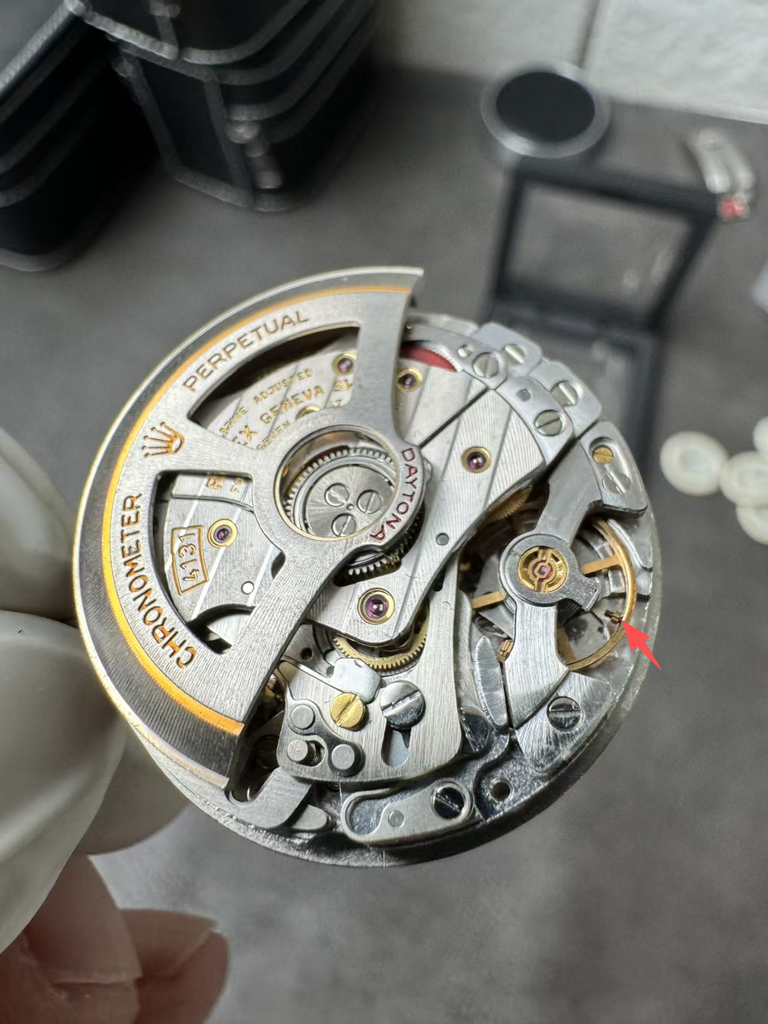
The first type uses screws or nuts positioned around the outer or inner edge of the balance wheel. By moving them closer to or farther away from the center of the balance wheel, the moment of inertia of the balance wheel can be changed.
Rolex and Omega movements use this type of free-sprung structure.
The second type uses adjustable rotating weights positioned on the surface of the balance wheel near its outer edge. These weights are usually semicircular. By rotating them, their eccentric position changes, which alters the moment of inertia of the balance wheel.
Patek Philippe uses this type of free-sprung structure.
Which Replica Watches Use Free-Sprung Movements?
Free-sprung movements actually appeared in the replica watch industry quite a long time ago, even before 2024.
Because some collectors pursue extremely high levels of accuracy, before factories began producing free-sprung movements themselves, some people were already willing to spend a large amount of money modifying their replica watches with free-sprung movements.
Then, in 2024, a factory called UFO appeared in the Rolex replica market and introduced a free-sprung 4131 movement.
However, it was not until 2026 that free-sprung movements truly became popular.
Today, many factories are developing free-sprung movements, particularly in the Rolex replica market. Below, I will introduce the main free-sprung movements currently being used in replica watches.
JH4131
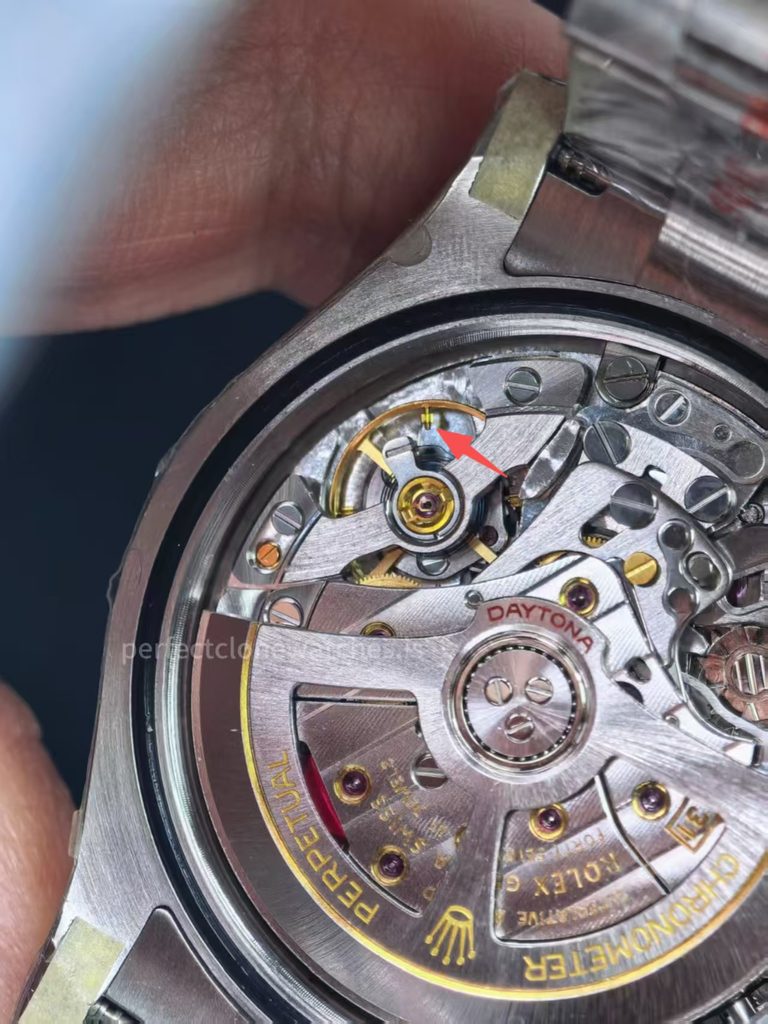
The JH4131 is used in high-end replicas of the 12xxxx-series Rolex Daytona. Like the rose gold Daytona 126515 made by ERF.
Many factories are currently using the JH4131 free-sprung movement, including several well-known names such as QF, ER, and RW.
JH4132
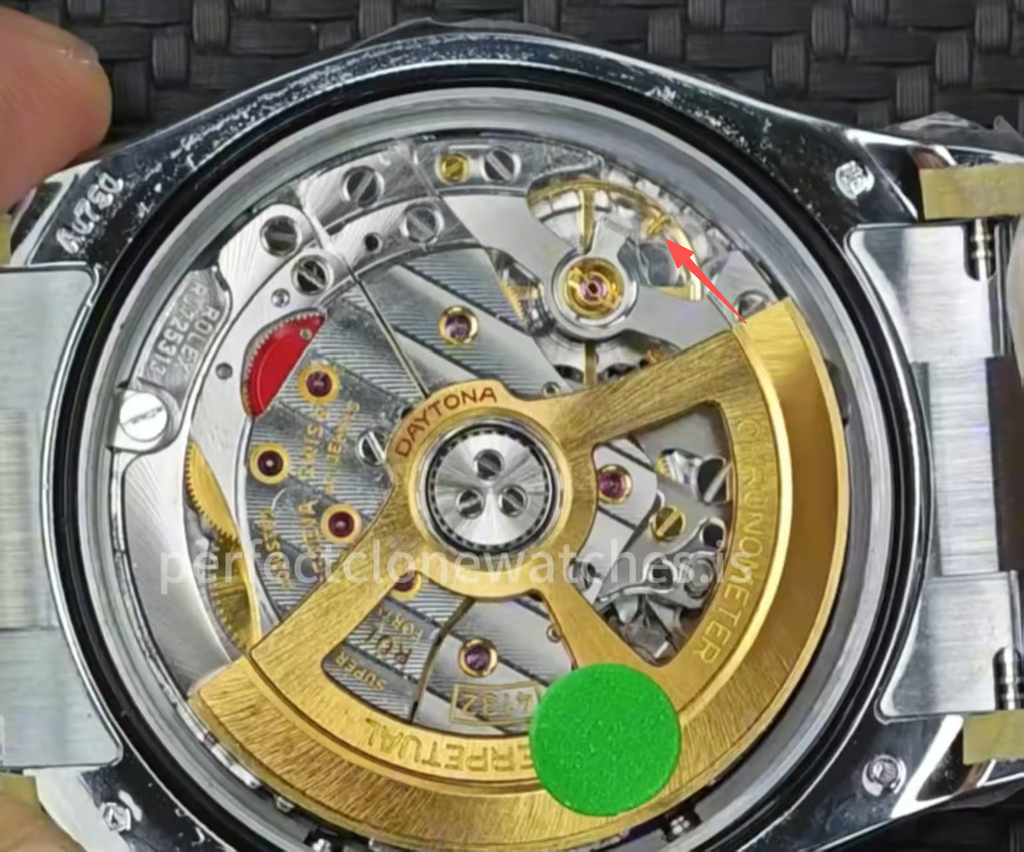
This free-sprung movement is used in the replica Rolex Daytona 24 Hours of Le Mans.
This was the first Rolex replica watch on the market with a transparent caseback, and it has become very popular.
Factories currently using this movement include QF and RW.
The two free-sprung movements mentioned above, which are used in Rolex Daytona replicas, are genuine free-sprung designs because their balance wheels are fitted with regulating weights.
VS Factory has also just released a Daytona with a so-called free-sprung 4131 movement. However, in my personal opinion, the VS 4131 is not a true free-sprung movement because there are no regulating weights on the balance wheel.
JH3235
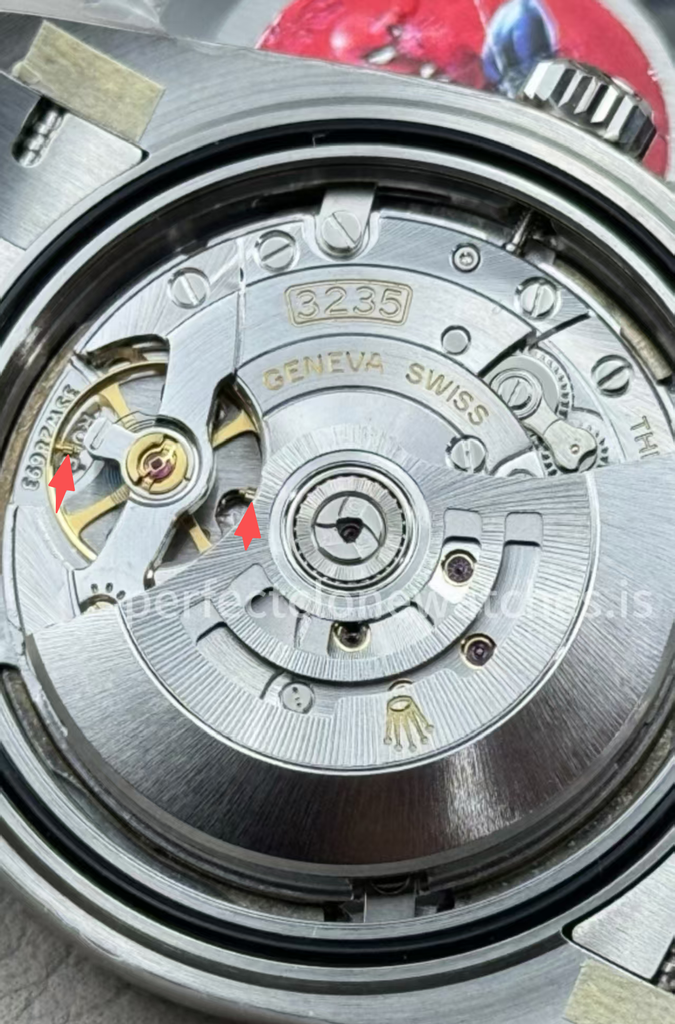
The JH3235 free-sprung movement is used in replicas of the Rolex Datejust, Yacht-Master, and 41mm Submariner.
Factories currently using this movement mainly include Gold, ER, Rich, QF, RW, and others.
JH3285
The free-sprung JH3285 movement is currently used by four main factories: Gold, QF, Rich, and RW.
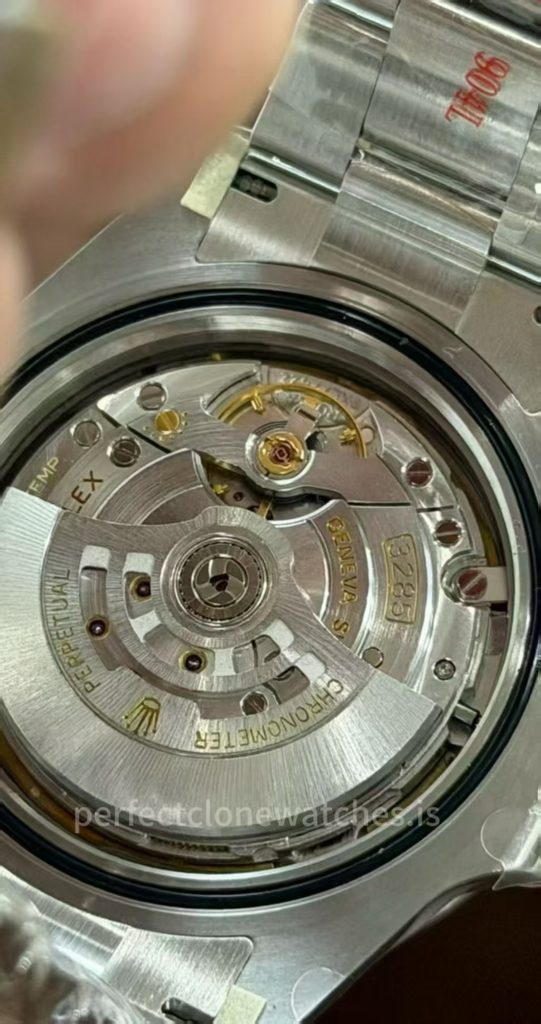
This movement is mainly used in replicas of the Rolex Explorer II and Rolex GMT-Master II.
ORF 8800 and 8806
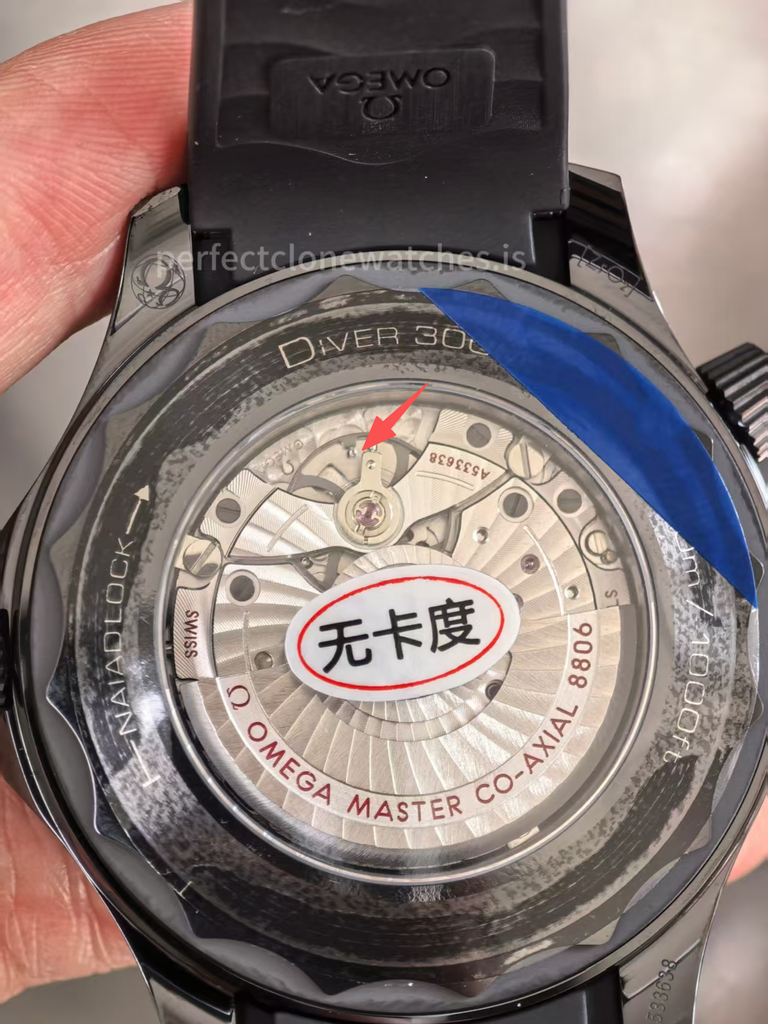
These are newly released movements and represent the first free-sprung movements in the Omega replica watch market.
They were developed by OR Factory and are mainly used in replica Omega Seamaster Diver 300M models.
AP 4302
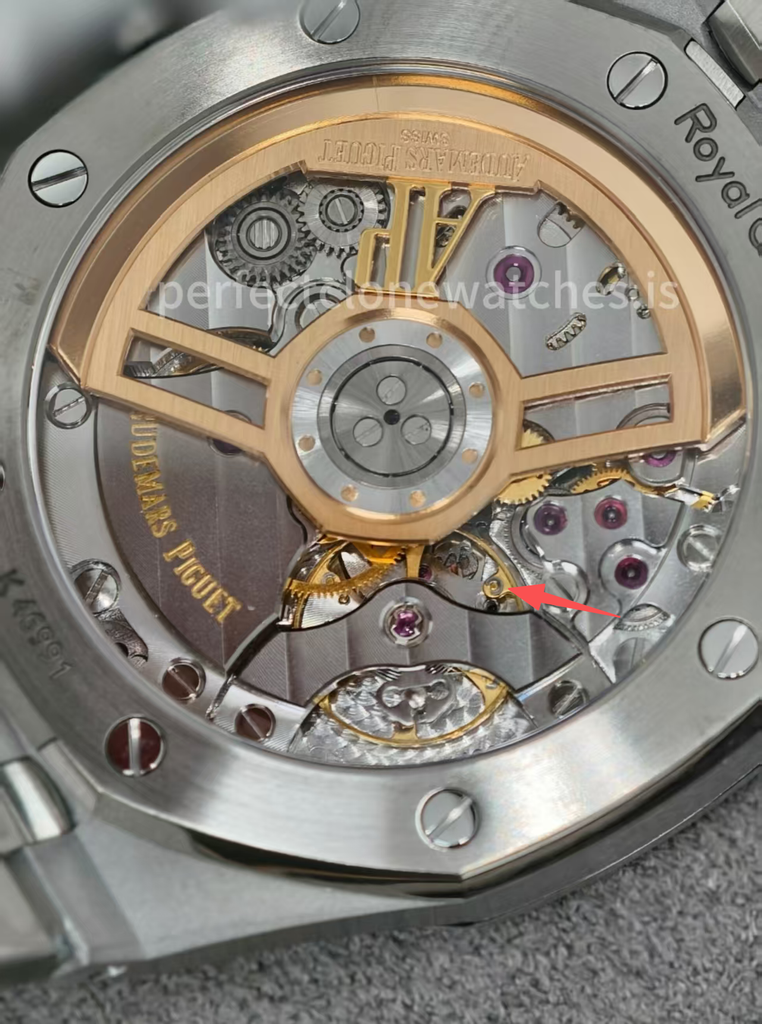
This free-sprung movement is used in Audemars Piguet replicas.
The main model using the AP 4302 free-sprung movement is the Royal Oak 15500.
This movement was originally developed by APS Factory. After APS was forced to close, the movement was inherited and continued by ZF.
AP 4401
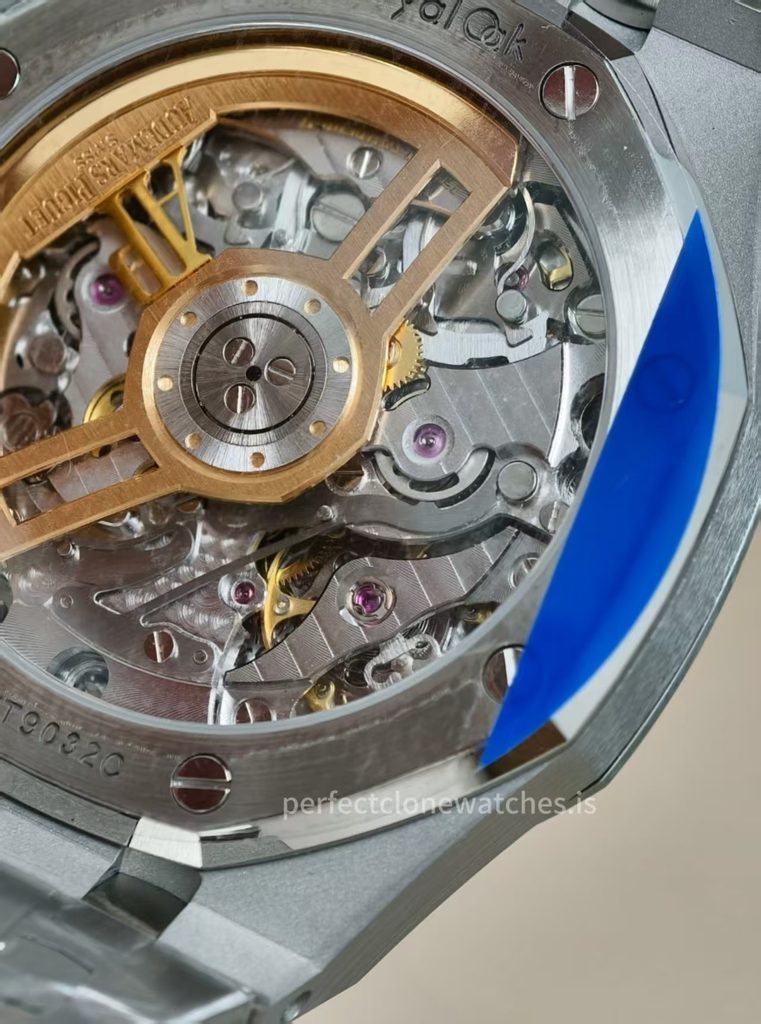
The AP 4401 was also originally developed by APS Factory and is now being used by ZF.
It is mainly used in replica Audemars Piguet 26240 and 26420 models.
One of the major selling points of this movement is that it offers a genuine flyback chronograph function.
There is also an interesting story behind this movement.
When APS first released the AP 4401, there was no free-sprung version. Later, VS Factory entered the Audemars Piguet market and introduced a free-sprung 4302 movement.
Facing competition from VS, APS then developed a free-sprung version of the 4401.
Nautilus 5711 324
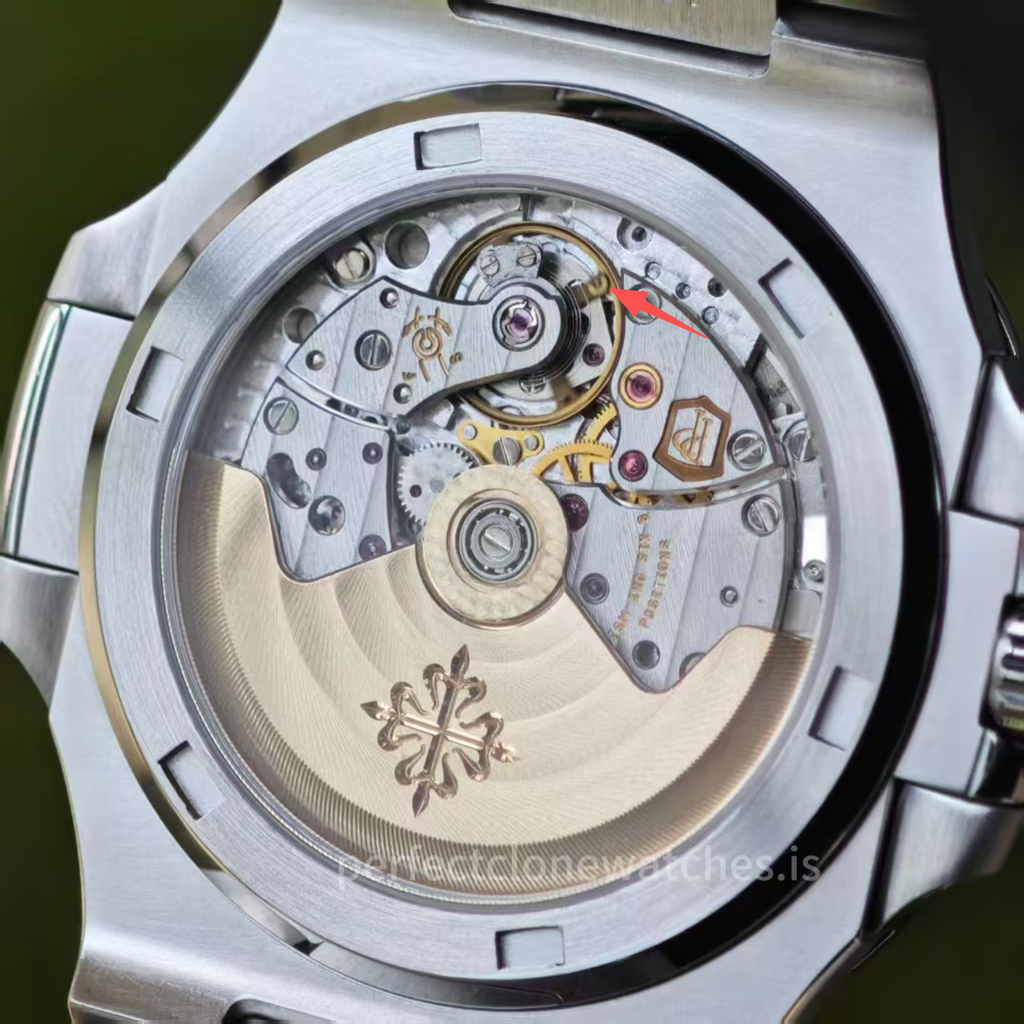
Currently, only one factory makes the free-sprung 324 movement for the replica Patek Philippe Nautilus 5711.
That factory is PMS, which stands for Prime Mod Studio.
Nautilus 5712 240
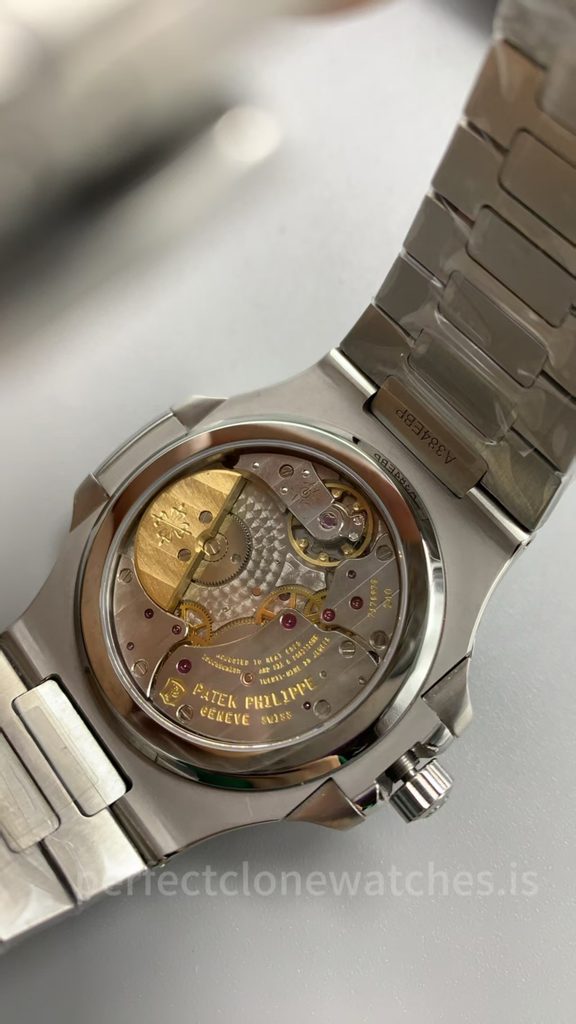
The free-sprung 240 movement used in the Patek Philippe Nautilus 5712 was also developed by PMS.
RM35-02 RMAL1
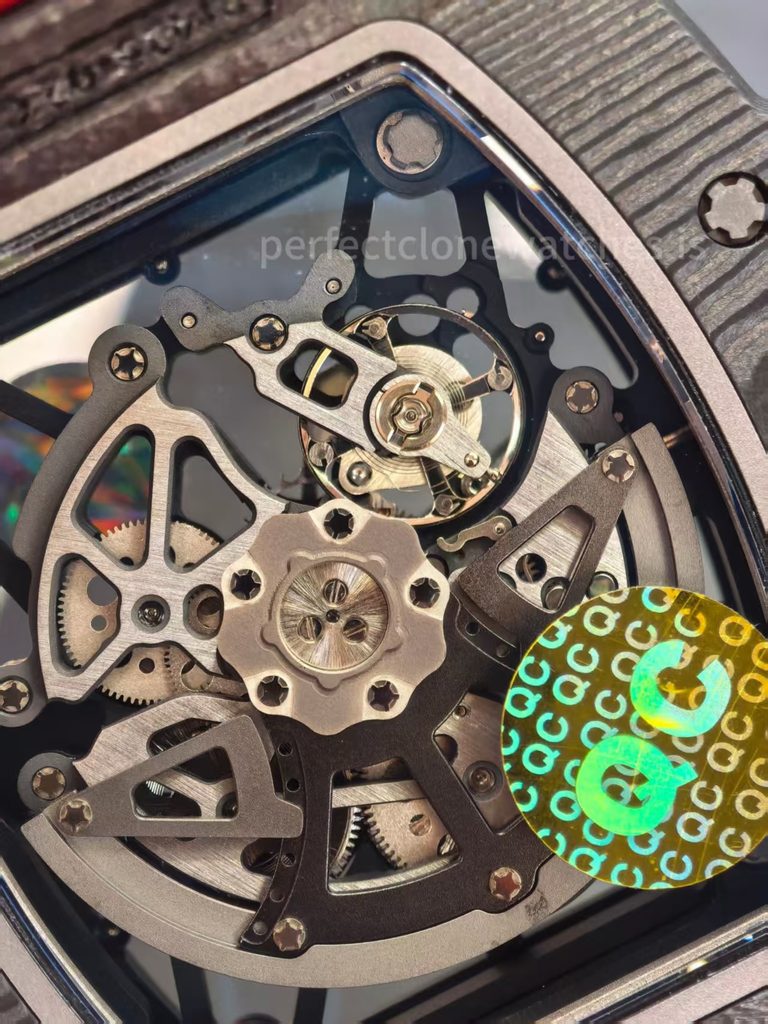
The RMAL1 movement was originally developed by APS Factory.
Later, Umi Studio began using it, and it is now mainly found in replica Richard Mille RM35-02 models.
RM055 RMUL2
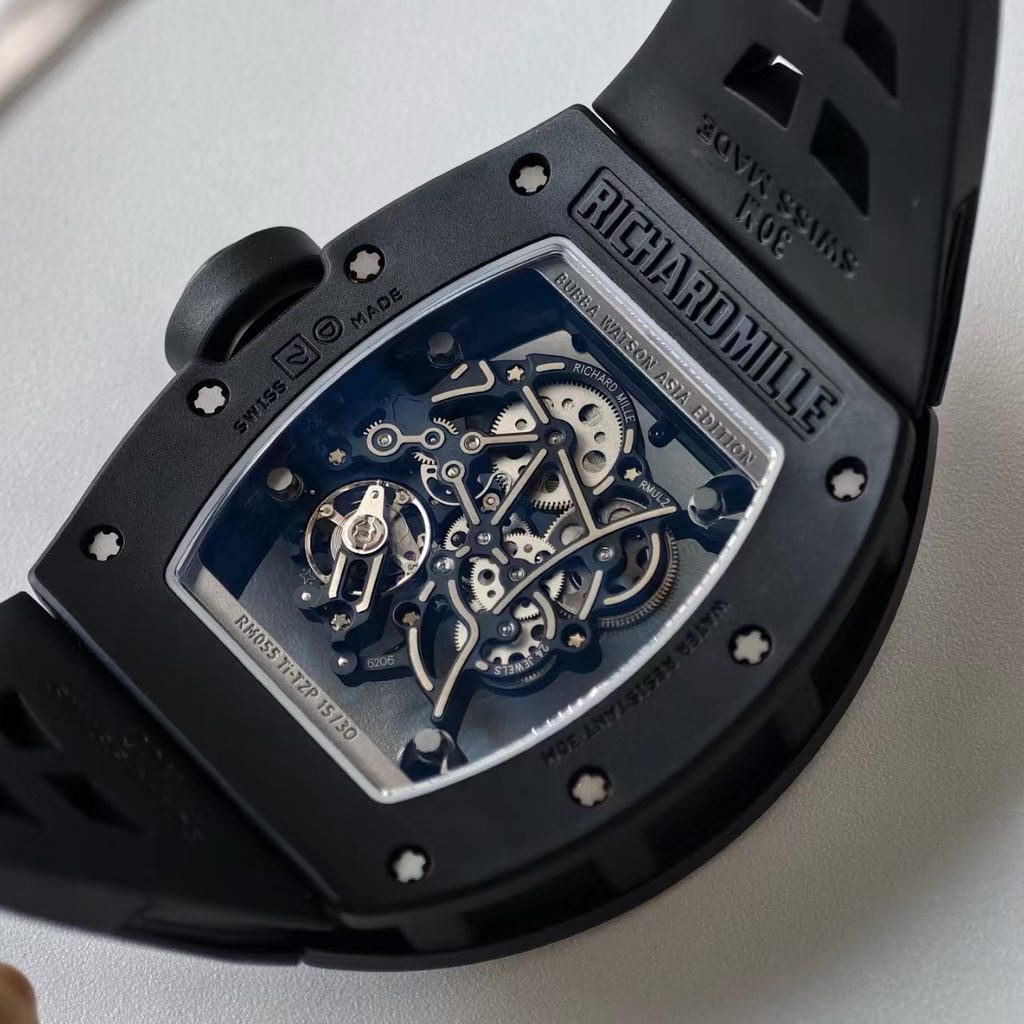
The RM055 is also available with the free-sprung RMUL2 movement.
Currently, two factories are using this movement: A9 and Umi.
The Movements with Fake Free-Sprung Balance System
The movements I shown above are with true free-sprung balance, but in the market, the movements using fake free-sprung balance system also existed, some factories are claiming that their watches use free-sprung movements, actually they just do a free-sprung effect, not real free-sprung. Here I will show you such fake ones.
VS4302
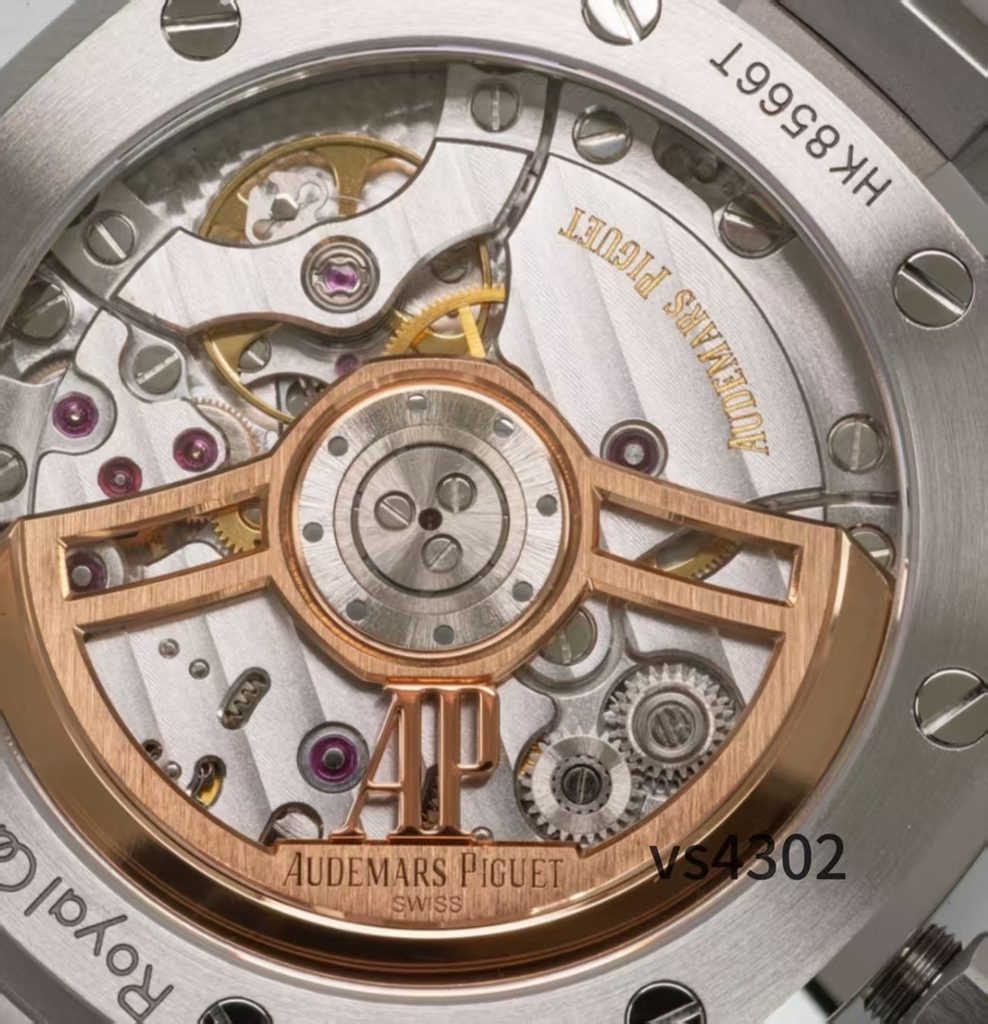
This is the clone 4302 from VS Factory. It was developed to challenge the market position of APS in Audemars Piguet field. It is a good movement, but it has a fake free-sprung balance. Let’s see the comparison between it and real 4302 free-sprung movement below.
APS 4302 vs VS 4302
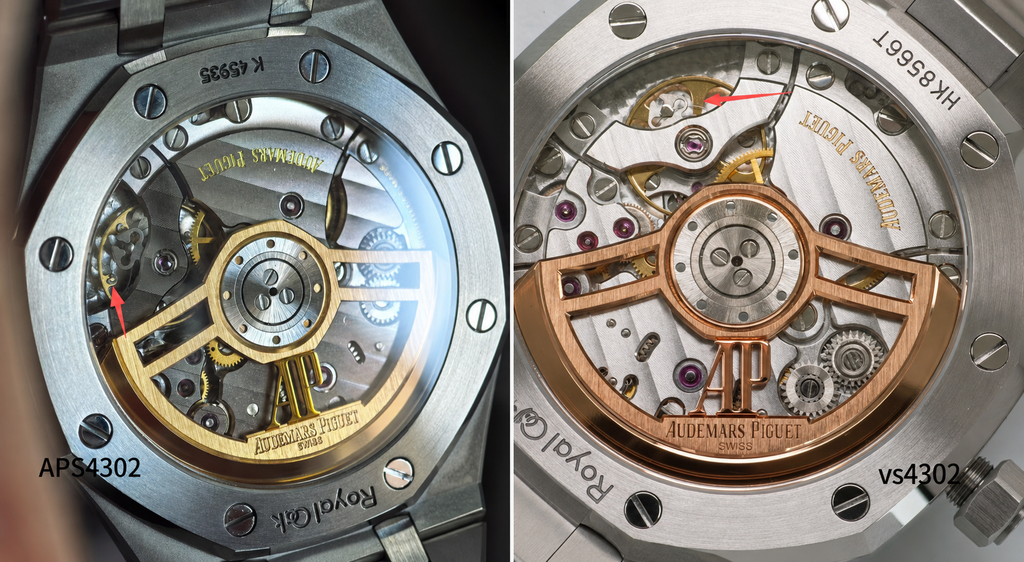
On the picture above, the left movement was made by APS Factory before, although this factory closed, but the movements they left are very good. The right movement is from VS.
We can clearly see the semicircular screws on the golden balance wheel, while VS 4302 does not have. So VS 4302 is just a fake free-sprung movement.
Now, currently two factories are using the clone 4302 movement left by APS, they are ZF and OCTA, and the movement is mainly being used in replicas of Audemars Piguet 15500 and 15510.
At the same time, the VS 4302 is also used by another factory, which is DDF.
VS3235
Here I am not discussing the 3235 movement developed by VS Factory years ago. It is the clone 3235 movement with “free sprung balance effect” that was brought by VS in 2026.
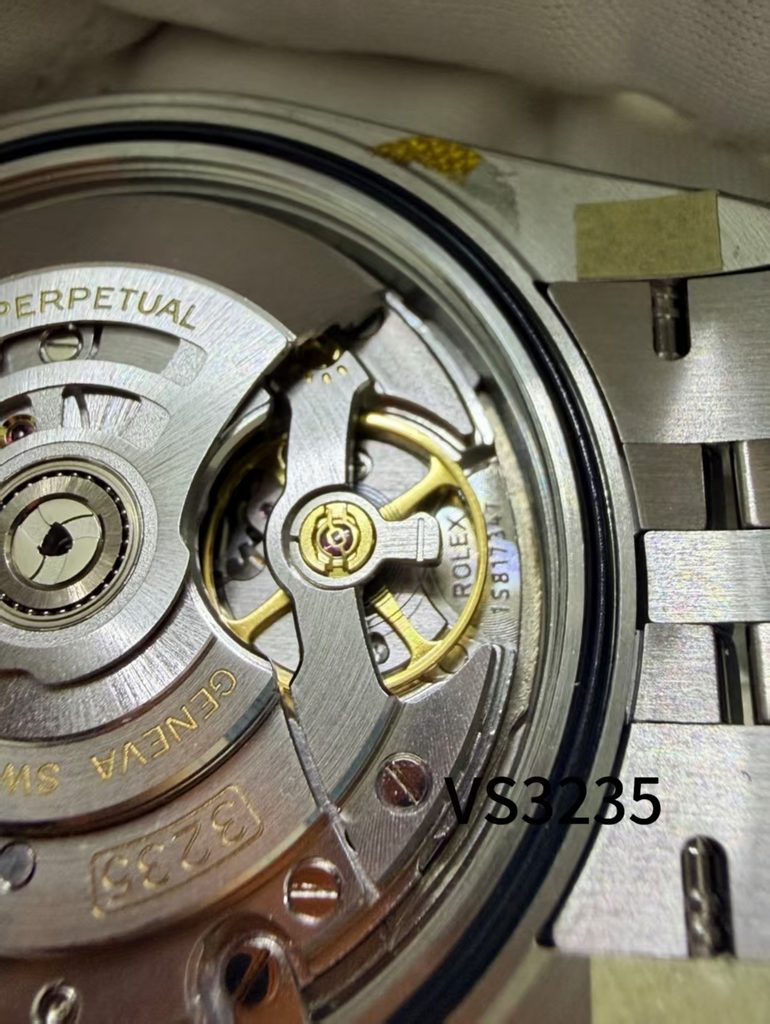
VS3235 vs JH3235
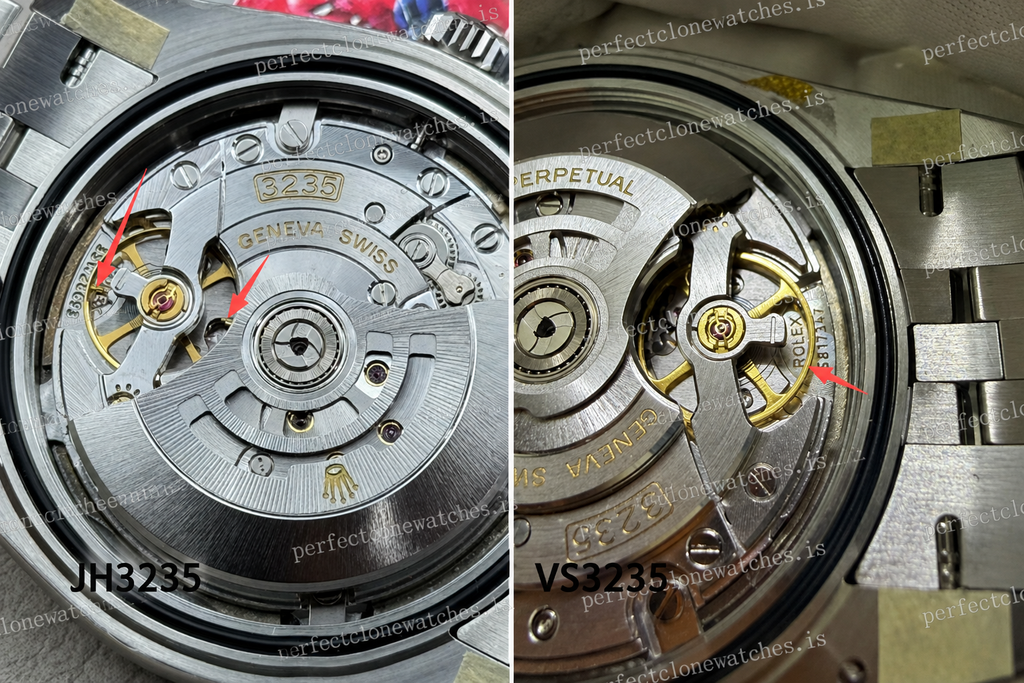
The picture comparison between JH3235 and VS3235. The left JH3235 is a true free-sprung balance movement, the place I marked with red arrow shows you the weights on the inner edge of the balance. VS3235 does not have weights. By the way, I also remove the balance bridge of the VS3235 and found the extra regulator was hidden there, it means the wearer still needs to use that regulator to adjust error, which is not convenient.
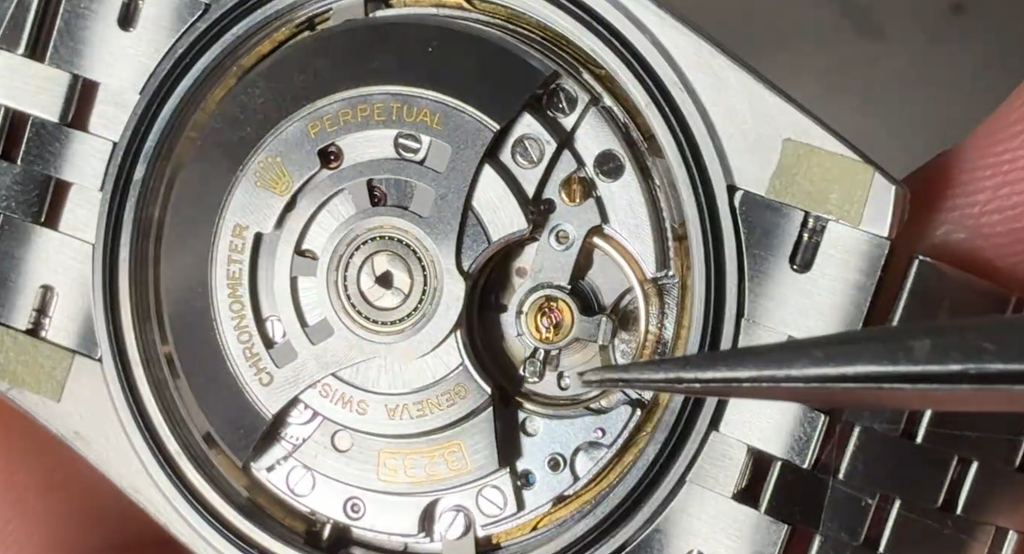
VS4131
This is another movement with free-sprung balance effect from VS Factory, absolutely I am not talking its traditional 4131 movement, I mean the latest free-sprung 4131 made by VS in 2026, but it is the movement with fake free-sprung balance system.
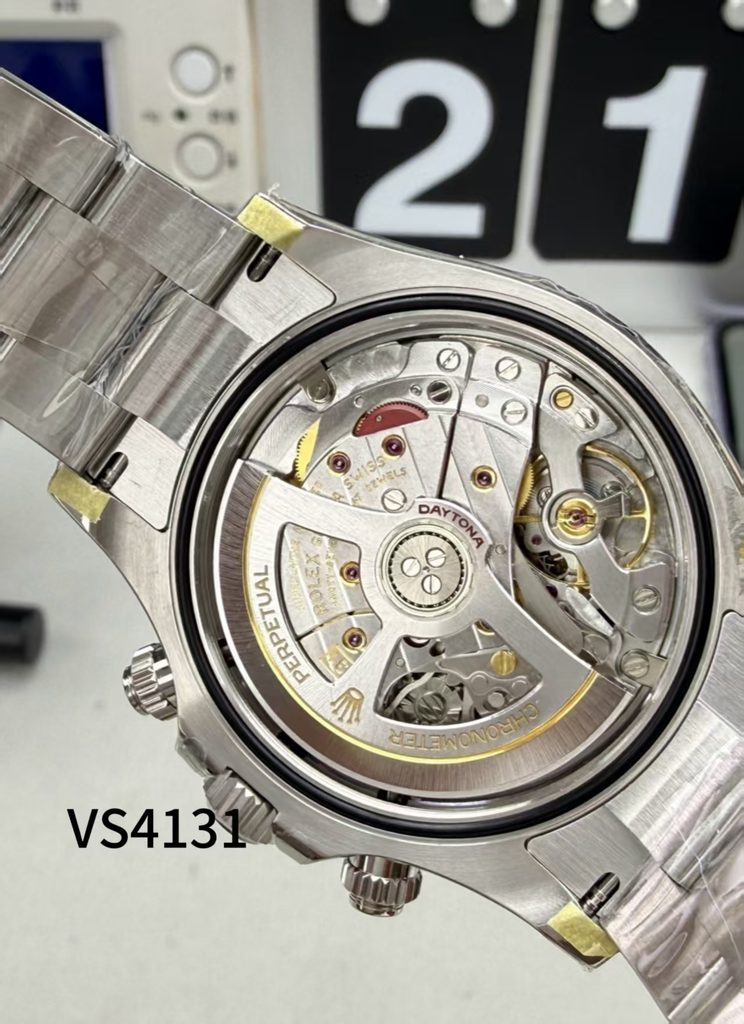
This movement now is being used in the 12-series Daytona replicas by VS. But VS also provides traditional clone 4131 movements at the same time.
VS4131 vs JH4131
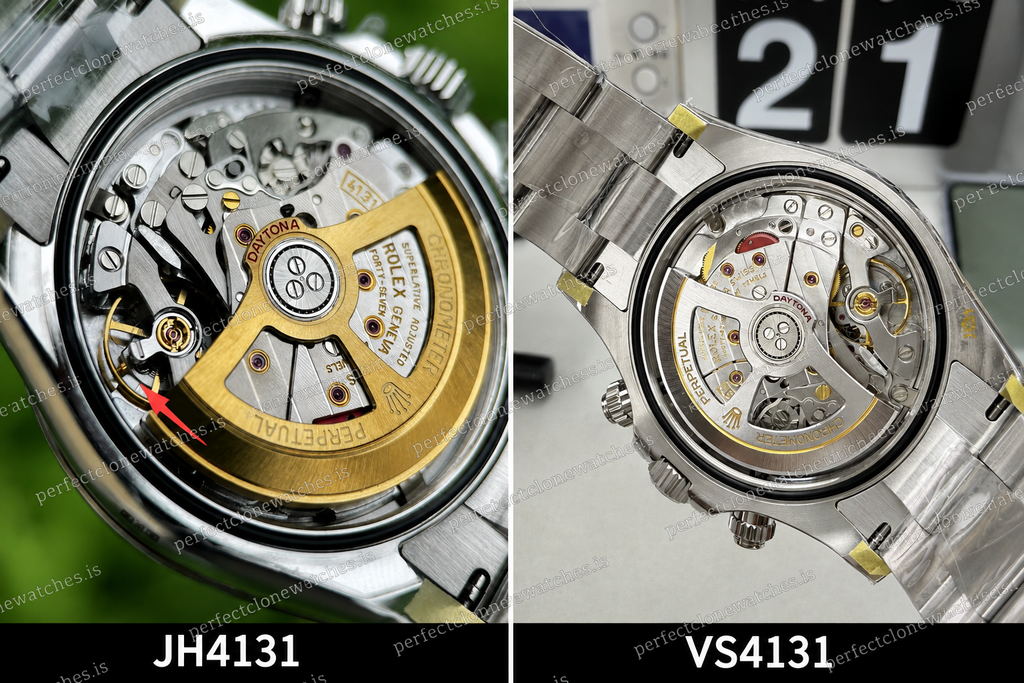
The left JH4131 features screw weights on the balance. While the balance of the VS4131 shown on the right is smooth, it does not have weights on.
Are Free-Sprung Movements Really Better?
In the world of genuine Swiss watches, I believe a free-sprung movement is the better choice. Over the long term, it can better minimize the larger deviations in accuracy that may result from repeated adjustments.
However, when it comes to replica watches, or more accurately, super clone watches, the situation is quite different. Compared with traditional regulated movements, free-sprung movements do not necessarily offer across-the-board advantages. Because most replica watches have a solid case back, people could not see the movement inside, so they could not tell the difference.
And free-sprung balance movements do not mean they are more stable. However, it is more difficult for a jeweler to adjust the errors on them, sometimes you need to pay more to adjust the erros.
On some exhibition-caseback models, such as the Omega Seamaster No Time to Die and the new Daytona 126502, the movements do indeed look closer to those of the genuine watches when viewed through the caseback. That is simply a fact.